My Color Personality Test: Find Out Your True Colors
What Is the True Colors Personality Model?
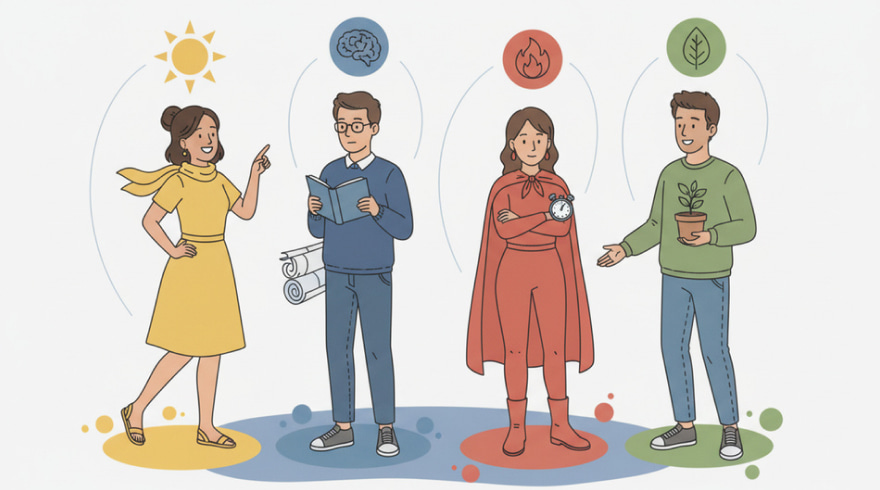
The True Colors framework translates complex personality theory into four vivid color energies that people can easily recognize and apply. Rather than forcing individuals into rigid boxes, it highlights patterns in motivation, decision-making, and communication. The outcome is a shared language that feels friendly, yet it retains enough nuance to guide productive conversations at home, in classrooms, and across workplaces. By simplifying temperament theory into color metaphors, the model helps people move from confusion to clarity in minutes.
The origins of the approach trace back to temperament research that sought to make typology practical without sacrificing depth. Many learners first encounter the framework through tools like the free true colors personality test, which offers a quick snapshot of preferences. Although brief assessments can never replace thoughtful self-reflection, they often spark curiosity and lead to richer dialogue. From there, users typically explore descriptions, scenarios, and activities that connect the colors to real-life choices.
Durability is another reason the system remains popular decades after its introduction. Educators appreciate how a true colors personality test free option lowers barriers to reflection, allowing entire groups to participate without budget constraints. Counselors value the model’s accessible language when coaching conflict resolution or planning career pathways. Meanwhile, families like the memorable color labels because they turn everyday friction into teachable moments, creating a kinder vocabulary for differences.
How a Color-Based Assessment Works
Most color-based assessments present clusters of statements, word pairs, or scenario choices tied to distinct motivational drives. Respondents sort or rate options that feel most natural, least natural, or situational. Scoring tallies reveal a dominant color alongside secondary influences, and those blends help explain why two people with the same top color can still look different in practice. This process is fast, lightweight, and approachable for non-specialists who want practical insight without jargon.
Digital quizzes vary in length, but the best ones balance brevity with reliability to prevent random clicking from skewing results. Many newcomers try a widely shared tool such as a free color code personality test before diving deeper into workshops or coaching. Short formats are ideal for icebreakers, cohort intros, or pre-work for a longer training. For those who prefer a quick entry point, a concise color personality test free experience can build momentum for more structured development later.
After scoring, interpretive guides translate colors into motivations, communication cues, and stress signals. Feedback usually highlights strengths first, then offers constructive watch-outs. This strengths-first approach reduces defensiveness and encourages positive change. When users reflect on examples grounded in everyday interactions, emails, meetings, or family decisions, they quickly see why color language sticks and how it can diffuse tension before it escalates.
Benefits for Personal Growth and Relationships
Self-awareness sits at the core of any growth journey, and color insights provide a lens for noticing patterns without self-judgment. People learn why certain tasks energize them while others drain them. They also discover cues for stress, like over-planning or impulsivity, and can set small guardrails that keep strengths from turning into blind spots. This perspective fuels habits such as better boundaries, improved time management, and more thoughtful decision-making.
Relationship benefits are equally profound because color language makes differences easier to discuss. Someone exploring their preferences through a free color personality test may quickly realize that a partner or friend thrives on a different kind of structure. Communication then shifts from “you’re wrong” to “you’re wired differently,” which opens space for empathy. For those seeking additional practice prompts, a simple free online color personality test can pair with reflection questions to guide respectful conversations that reduce friction.
To turn insight into action, consider micro-experiments that test new communication choices for a week at a time. Small adjustments, like clarifying deadlines, asking for context, or opening with appreciation, often yield outsized improvements. Over time, these experiments build into a flexible toolkit you can adapt to any relationship, from friends and family to community groups and volunteer teams.
Workplace Applications and Team Dynamics
Teams function best when members understand how each person likes to plan, decide, and communicate. Color language gives managers and contributors a fast, memorable way to map workflows to strengths. Leaders can assign roles that align with natural preferences, design agendas that honor diverse processing styles, and prevent common misfires like overloading detail-averse teammates with dense documentation. The result is fewer bottlenecks and smoother collaboration cycles.
When introducing the concept to a group, start with low-stakes exercises that build psychological safety. New hires might complete a quick resource such as a personality color test free before their first team meeting, then share highlights in a short round-robin. Remote teams can post color preferences on project boards to clarify who wants concise bullet points versus richer background context. For broader cohorts, an accessible true colors personality test free online option can prime discussion before a facilitated workshop.
The following reference table summarizes the four commonly cited color energies with typical strengths and cautions. Use it as a conversational map rather than a rigid box, and invite people to add personal nuances that reflect their unique blend.
| Color | Core Drive | Standout Strengths | Common Blind Spots | Collaboration Tips |
| Gold | Stability and order | Planning, reliability, follow-through | Rigidity, over-scheduling, risk aversion | Share timelines early; define roles; honor commitments |
| Blue | Harmony and connection | Empathy, listening, facilitation | Conflict avoidance, people-pleasing | Invite feelings; validate perspectives; co-create agreements |
| Green | Competence and logic | Analysis, systems thinking, precision | Skepticism, aloofness, over-editing | Provide data; allow thinking time; clarify decision criteria |
| Orange | Action and variety | Initiative, adaptability, improvisation | Impulsivity, boredom, rule-bending | Offer fast experiments; keep meetings brisk; celebrate wins |
How to Take and Interpret Results
Preparation improves accuracy more than people realize, so choose a time when you feel calm and unhurried. Turn off notifications, breathe, and answer instinctively rather than trying to game the system. If you overthink responses, you may describe who you want to be instead of how you naturally behave under pressure. Honest, fast choices typically reveal the most reliable pattern.
After completing a simple assessment through a platform that offers a free true colors personality test online, review your top two color energies as a blended style. Many strengths emerge at the intersection where one color leads and another supports. When questions arise about phrasing or examples, compare multiple resources and note where explanations converge. Those overlaps will point to the most consistent themes.
It can also help to validate your findings with someone who knows you well. A trusted colleague might notice nuances you missed, while a friend may highlight everyday behavior you overlook. As you deepen your exploration, you might try a concise free true color personality test from another provider to see whether your results replicate. Consistency across tools increases confidence and gives you more language to explain your preferences.
Common Mistakes and Best Practices
One common misunderstanding is treating a color as a fixed identity rather than a flexible preference. People can and do adapt across settings, and growth often involves borrowing strategies from other colors. Another misstep is using labels to excuse poor behavior, which undermines the spirit of the framework. The point is mutual understanding that fuels better choices, not rationalizing habits that harm collaboration.
Time pressure can also reduce accuracy because rushed choices distort natural tendencies. For quick self-checks, some users rely on a straightforward tool such as a free color personality test online to refresh awareness before a big meeting or presentation. When results feel “off,” revisit the assessment when you’re rested and compare notes from prior attempts. Patterns that persist across contexts are the most trustworthy.
Finally, avoid stereotyping others after a single interaction. Encourage teammates to describe what helps them thrive, and treat color insights as conversation starters rather than verdicts. For deeper team rollouts, facilitators sometimes triangulate findings with pulse surveys or role-mapping exercises, which guard against overgeneralization. As you build shared practices, a brief check-in guided by a free real colors personality test can keep vocabulary fresh and aligned with evolving goals.
FAQ: Quick Answers About Color-Based Personality Tools
How accurate are color personality assessments?
They are directionally accurate when taken thoughtfully and interpreted as preferences, not absolutes. Accuracy improves when you answer instinctively, repeat the process under different conditions, and validate themes with trusted peers who observe your everyday behavior.
Can results change over time?
Core motivations tend to be stable, yet expression can shift with life stages, roles, or stressors. You might lean into a secondary color as responsibilities evolve, so treat results as a snapshot that benefits from periodic re-checks and reflection.
Should I use my color in resumes or job applications?
It is better to translate insights into concrete behaviors. Instead of listing a label, highlight outcomes such as “streamlined handoffs,” “facilitated consensus,” or “delivered data-driven recommendations,” which map your strengths to employer needs.
Is this model suitable for cross-cultural teams?
Yes, because its language focuses on observable preferences rather than value judgments. Still, culturally aware facilitation matters; adapt examples, provide context, and invite participants to describe how norms shape their communication styles.
How do I apply insights immediately?
Start with micro-commitments: clarify expectations before meetings, tailor message length to the audience, and schedule debriefs after key decisions. These small, repeatable habits compound into measurable gains in trust, speed, and quality.