My Color Personality Test: Find Out Your True Colors
What the Four-Color Model Is and Why It Captivates So Many People
The four-color approach is a simple, memorable way to describe recurring patterns in how people prefer to communicate, make decisions, and solve problems. Instead of dense typology codes, this method uses vivid hues to illustrate tendencies such as fast-paced versus methodical, or people-focused versus task-focused. Because the labels are clear, teams quickly adopt a shared vocabulary, which helps them decode behaviors during meetings, projects, and feedback conversations. The colors are not boxes; they are lenses that highlight strengths and potential blind spots, making it easier to adapt with empathy and precision in real-life situations.
Most versions of this framework blend accessible language with solid observational insights from organizational psychology and coaching practice. In many programs and workshops, the four color personality test functions as an entry point that invites reflection without overwhelming participants with technical jargon. People appreciate how the model normalizes differences, reducing interpersonal friction by turning “why” into “how” questions: how can we flex our style, how should we coordinate, and how do we match roles to natural energy. As a bonus, the color narrative makes retention effortless, so teams continue to use it months after the initial session.
Where the Approach Comes From and How Results Are Typically Generated
Color-based personality frameworks draw inspiration from longstanding ideas about temperament and observable behavior. Many modern interpretations echo research threads seen in workplace assessments that emphasize communication style, pace, and priorities. While instruments vary, they commonly look for patterns in how you respond to scenarios involving deadlines, social dynamics, conflict, structure, and ambiguity. Rather than claiming to predict every action, they highlight tendencies that show up consistently across contexts, which you can verify through self-reflection and feedback from colleagues who know your everyday habits.
Most questionnaires pair scenario items with statements about preferences, then synthesize a primary color with secondary influences that round out your profile. In practitioner circles, the 4 color test personality label often signals a plain-language summary that distills complex behavioral signals into a compact narrative. Quality providers emphasize context: color is a shorthand, not a destiny. They also encourage calibration over time, because significant role changes or new environments can nudge visible behaviors, even if core values remain relatively stable.
- Expect a quick survey experience and a concise, practical report.
- Look for guidance on strengths, stress patterns, and collaboration tips.
- Prefer tools that recommend actions rather than fixed labels.
Benefits for Communication, Team Culture, Leadership, and Hiring
Organizations adopt the color framework because it transforms abstract soft skills into concrete, observable cues. When people recognize signals, directness, detail-orientation, enthusiasm, or steadiness, they respond with targeted adjustments. Meetings speed up or slow down appropriately. Feedback becomes clearer. Sales conversations align with buyer preferences. Even cross-functional projects move with less friction as leaders balance urgency with diligence and empathy with accountability.
From a talent perspective, managers gain a lightweight map for assigning responsibilities and pairing complementary strengths. For many HR teams, the 4 colors personality test provides a common lexicon that reduces misinterpretation during interviews and performance reviews. Rather than stereotyping, the aim is to notice what environments enable someone's best work, tight deadlines versus exploratory sprints, structured procedures versus improvisation, solo focus versus collaborative brainstorming, then manage expectations accordingly across the workflow.
- Enhance one-to-one coaching with tailored communication tactics.
- Strengthen project kickoffs with explicit norms tied to team profiles.
- Improve conflict resolution by reframing intent through color lenses.
- Boost employee engagement by aligning roles with natural energy.
Budget-conscious teams still want useful insights without heavy software commitments. In that context, a free 4 color personality test can serve as a low-barrier introduction that sparks curiosity and primes participants for deeper workshops. Practical application matters more than perfect precision: the model delivers value when people translate color insights into daily micro-habits, clarifying requests, signaling preferences, and flexing style in high-stakes interactions.
The Four Colors in Action: Core Drives, Strengths, and Watch-Outs
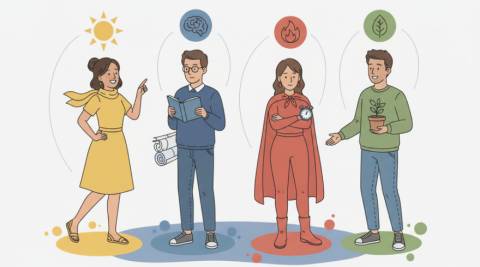
Most toolkits describe four recurring style families with approachable metaphors. One color often embodies decisive, results-first energy that relishes challenge and clear goals. Another highlights analytical depth, structure, and a love of accuracy. A third emphasizes supportive stability, patience, and dependable follow-through. The final color radiates enthusiasm, storytelling, and social connection. In practice, everyone blends shades, yet a dominant hue typically shows up under time pressure, during negotiations, or when leading a critical initiative. The goal is not to argue about labels but to use these tendencies as a compass for collaboration and self-management.
| Color | Core Drive | Communication Style | Strengths | Watch-Outs |
| Red | Action and results | Direct and succinct | Decisive, competitive, bold | Impatience, bluntness |
| Blue | Accuracy and logic | Precise and structured | Thorough, reliable, quality-focused | Overanalysis, rigidity |
| Green | Harmony and support | Calm and considerate | Loyal, steady, collaborative | Conflict avoidance, indecision |
| Yellow | Inspiration and connection | Expressive and optimistic | Persuasive, creative, energizing | Distraction, overpromising |
Interactive training works best when participants practice flexing, like dialing up clarity for detail-driven colleagues or adding warmth for relationship-oriented peers. In many public seminars, the four colors personality test is used to demonstrate these pivots with role-play and feedback loops that surface nuance and reduce caricatures. Coaches remind teams that skillful collaboration comes from blending styles, bringing speed without sacrificing quality, and fostering empathy without losing accountability, so each project benefits from the full spectrum.
Digital tools can help teams apply insights at scale with playbooks for meetings, emails, and stakeholder updates. In some ecosystems, a 4 colors personality test free sample introduces the basics, followed by richer assessments that add context like stress triggers, decision heuristics, and growth recommendations. Whatever the format, the enduring payoff comes from actionable routines: clear agendas for the methodical, space for brainstorming with the expressive, steady check-ins for the supportive, and crisp goals for the decisive.
How to Implement Results Responsibly and Ethically
Assessment results become transformative when paired with reflection, consent, and ongoing practice. Treat color insights as a shared language, not a sorting mechanism. Encourage people to challenge their own defaults, direct communicators can slow down for listening, detailed planners can time-box analysis, steady collaborators can voice dissent earlier, and exuberant networkers can document commitments carefully. Managers should invite dialogue about preferences, ask what support looks like in high-pressure phases, and adapt team rituals to honor diversity of pace, detail, and interaction needs.
- Introduce the model with context, including benefits and limitations.
- Use results to inform development plans, not to gate opportunities.
- Pair labels with behaviors and examples observed on the job.
- Revisit profiles after role changes or major organizational shifts.
- Avoid stereotyping by acknowledging blended and situational styles.
Policy-wise, store results sensitively and keep participation voluntary. Before making decisions, a personality 4 colors test should be one of several inputs alongside interviews, work samples, and performance data. Leaders model healthy use by sharing their own profiles, celebrating strengths in others, and demonstrating flexibility. Over time, the best evidence of impact is cultural: smoother handoffs, clearer expectations, fewer misunderstandings, and a shared sense that differences make the team more resilient and innovative.
FAQ: Common Questions About the Color-Based Approach
Is this model scientifically valid?
The color framework is a practical heuristic for communication and teamwork, not a clinical diagnostic instrument. Many versions borrow concepts from established organizational psychology, yet they differ in rigor and psychometric validation. In practical terms, the 4 color personality test helps people notice patterns they can act on, especially around meetings, feedback, and collaboration norms. For formal selection or mental health decisions, organizations should rely on validated tools and qualified professionals, using color insights as a complementary, coaching-oriented perspective.
Can my style change over time?
Core preferences tend to be stable, but what others see can shift with role demands, stress levels, and new skills. For example, a detail-leaning analyst promoted into a growth role may practice decisive behaviors more often. Reassessment and reflection are valuable after major transitions, because context can amplify certain tendencies while quieting others. Think of color as a baseline map you update as your environment and responsibilities evolve.
How do teams apply the colors day to day?
Translate insights into routines: set crisp outcomes and timelines for fast-paced colleagues, provide data and structure for analytical teammates, protect focus time for steady contributors, and create space for ideation with expressive partners. Small adjustments, agenda previews, decision logs, or explicit roles, compound into major gains. The more a team normalizes these accommodations, the fewer conflicts become personal, and the more energy shifts into execution and innovation.
Should we use color results in hiring?
Use them cautiously and ethically. The colors can enhance interviews by clarifying communication preferences and job fit conversations, but they should never replace evidence like work samples, structured questions, and reference checks. Keep results as one data point among many, and avoid excluding candidates based on style alone. Diverse blends often outperform homogeneous teams because they balance speed, quality, stability, and creativity.
What are common pitfalls to avoid?
Avoid stereotyping, overreliance on labels, and weaponizing profiles in conflicts. Skip one-size-fits-all scripts; instead, anchor on behaviors and context. Revisit norms periodically to ensure the model remains a tool for empathy and performance, not a shortcut for judgment. Finally, invest in follow-up practice so insights become habits rather than a one-time workshop memory.
For readers exploring entry points, the 4 colors personality test and other variations mentioned across this guide each offer a concise way to start learning and applying the framework with real-world intent.